

RMWBH Law – A Full Service Law FirmRMWBH Law – A Full Service Law FirmRMWBH Law – A Full Service Law FirmRMWBH Law – A Full Service Law Firm
  • HOME
  • OUR FIRM
    • MISSION, VISION AND VALUES
    • BOARD CERTIFIED ATTORNEYS
    • LOCATIONS
  • ATTORNEYS
  • PRACTICE AREAS
    • COMMUNITY ASSOCIATION LAW
    • CONSTRUCTION LAW
    • CORPORATE, SECURITIES, AND BUSINESS LAW
    • CYBER RISK
    • LABOR AND EMPLOYMENT
    • LITIGATION
      • APPELLATE
      • ARBITRATION
      • COMMERCIAL LITIGATION
      • INSURANCE DEFENSE
      • FIDUCIARY LITIGATION
      • PROFESSIONAL LIABILITY
    • REAL ESTATE PRACTICE
      • LAND USE
      • REAL ESTATE DEVELOPMENT
      • REAL ESTATE FINANCING
      • REAL ESTATE TRANSACTION
  • PUBLICATIONS
    • BLOG
      • CORPORATE LAW BLOG
      • PROPERTY OWNERS ASSOCIATION BLOG
      • REAL ESTATE BLOG
    • COMMUNITY ASSOCIATION NEWSLETTER
    • IN THE NEWS
    • WEBINARS
    • SINGLE-FAMILY PROPERTY CODE BOOK
    • CONDOMINIUM PROPERTY CODE BOOK
  • EDUCATION
  • CAREERS
  • CONTACT US
  • MAKE A PAYMENT
NextPrevious

5 Steps to Improve Fine Enforcement and Collection

By Cliff Davis | HOA, RMWBH | Comments are Closed | 25 September, 2019 | 5
fine-letter

Did you hear the one about the homeowner who, no matter how many violation letters the community association sent, refused to stop parking his car in his front yard? Or how about the homeowner who did not care that her tenant refused to remove his window unit air conditioner even though she had been sent three violation letters? Sometimes a violation letter is not enough, and another tool is needed to “encourage” a homeowner to comply with the applicable Restrictions (which term includes the Declaration and all properly adopted rules, regulations and policies). A monetary fine may just be that tool. It may take a hit to a homeowner’s pocketbook to get the owner to sit up and take notice or, better yet, to take action. Before we go further, some housekeeping is in order. This article addresses issues related to levying fines in single-family and non-condominium townhome associations only. In those types of associations, we believe that, before a fine can be levied, the applicable governing documents must give the association the authority to levy fines. Preferably, fining authority will be found in the applicable Declaration of Covenants, Conditions and Restrictions (the “Declaration” or similarly named document). If not found in the Declaration, fining authority may be in the laundry list of association powers contained in most association bylaws. If fining authority is not contained in any association document, we recommend that, at a minimum, the Bylaws be amended to add language that specifically authorizes the association to levy a fine for a violation of the Restrictions. Once fining authority is confirmed or in put in place, there are steps that the association must take and steps that the community association can take to make fines an effective tool in enforcing the Restrictions.

Step 1: Follow the Law

Texas Property Code Section 209.0051(h)(1) states that a board of directors may not, unless done in an open meeting for which prior notice was given to the owners, consider or vote on fines. To be clear, the decision to levy a fine must be made in the open session of a properly notice meeting. This decision should be documented in the board meeting minutes. Having said that, the name and address of the homeowner being fined should not be referenced in the meeting minutes. Consider using an internal account number (for example, the account number assigned to the property by the management company) when documenting decisions to levy a fine against a homeowner. It may be prudent to have a standing agenda item for every board meeting such as: “The Board will consider and vote on levying fines on owners who are in violation of the Association’s governing documents.” It is prudent to discuss and clarify this requirement with the association’s attorney.

Step 2: Check to see if a “209 Fine Letter” Exists

Before a fine can be levied for a curable violation (as defined in Texas Property Code Section 209.006), the community association must send a letter that complies with Code Section 209.006. This “209 fine letter” must: (1) describe the violation that is the basis for the fine; (2) state any amount due to the association form the homeowner (including amounts other than the fine amount); (3) inform the owner that the owner is entitled to a reasonable period to cure the violation (i.e., specify the date by which the violation must be corrected) and avoid the fine; (4) inform the owner that the owner may request a hearing before the Board (or a committee appointed by the Board) on or before the 30th day after the date the notice is mailed; and (5) inform the owner that the owner may have special rights or relief if the owner is serving on active military duty. A 209 fine letter must also be sent for an uncurable violation (as also defined in Texas Property Code Sec. 209.006), however, because an uncurable violation is a violation that has already occurred and is not ongoing, the 209 fine letter for an uncurable violation does not have to give the owner an opportunity to cure the violation or specify a date by which the violation must be cured.

Step 3: Be Ready to Prove the Violation
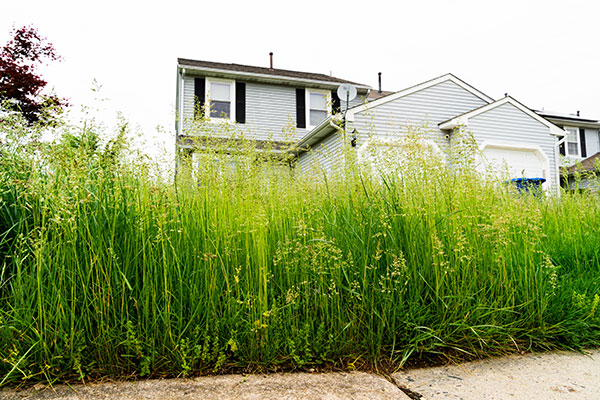
home-with-tall-grassAs many of you have probably experienced, many times a homeowner’s defense to a violation is to deny, deny, deny. This is easy to overcome. Photograph, photograph, photograph. When possible, which should always be the case if the violation is a curable violation, the association should stand ready to produce a dated photograph(s) to support its 209 fine letter. A picture does not have to say a thousand words – it only has to say, “This happened on this date” and the violating owner will not be able to deny that the violation occurred.

Step 4: Communicate Consistently and Effectively

A homeowner should never be surprised that the association has fining authority or that a fine has been levied. If the community association has a newsletter, every newsletter should have a “Thank you for complying with the rules section”. An eblast to all homeowners who have registered an email address with the association should be sent multiple times a year reminding homeowners that the community association has rules to live by and encourage all owners to comply and avoid the possibility of a fine. The community association’s website should have a copy of the fine policy along with copies of all other association governing documents. This is not just a good idea; it is required by Texas Property Code Section 207.006 for all single-family and non-condominium townhomes associations that are entitled to levy regular or special assessments. In fact, all governing documents must be recorded, or they are unenforceable.

Step 5: Be reasonable

Though many community associations use fines as part of an enforcement program, fines are not a cure all. In some instances, levying fines may only lead to an argument about the payment of fines. You can try to avoid these arguments by documenting violations as discussed above. If possible, investigate to determine if there are special circumstances. It may be that the homeowner has had a major life event that has affected the homeowner’s ability to remedy a violation. In that instance, fines may not be an effective tool in obtaining compliance. The board should also be conscious of the fact that levying fines may not work in some situations and the only way to obtain compliance is through a lawsuit seeking a court order that the violation be cured. In summary, fines present another tool to assist in enforcing a community association’s governing documents; however, before levying a fine, an association must ensure that it is complying with all applicable laws – including the law of common sense.


209, 209 fine letter, 209 letter, attorneys, collections, community association, community association law, deed restriction, deed restriction enforcement, fine, fines, legal education

Cliff Davis

Cliff Davis is a shareholder in the firm’s Real Estate section as a leader of the Community Association Team. His practice includes representation of land developers, community associations, condominium associations and other common interest communities. Cliff is Board Certified in Residential Real Estate and Property Owners Association Law by the Texas Board of Legal Specialization. He graduated from South Texas Law School in 1994.

More posts by Cliff Davis

Related Posts

  • Proper Documentation of Board Approval of Fines, Deed Restriction Enforcement Actions and Collection Actions

    By Cliff Davis | Comments are Closed

    In recent years, the Board of Directors (“Board”) approval process of fines, deed restriction enforcement actions and collection actions has come under greater scrutiny. We have seen an increase in cases where an owner or,Read more

  • New HUD Publication on Assistance Animals

    By RMWBH Team | Comments are Closed

    On January 28, 2020, the US Department of Housing and Urban Development (“HUD”) issued an “Assistance Animal Notice” (“Notice”) to provide guidance to housing providers who are presented with a request for an assistance animalRead more

  • RMWBH Houston Office Location Closed September 20

    By kbeam | Comments are Closed

    Due to the inclement weather in the Houston area over the past few days, and for the safety of our staff and clients, our Houston office location will be closed on Friday, September 20. OurRead more

  • The New RMWBH.com

    By kbeam | Comments are Closed

    Welcome to the new RMWBH.com! This has been a months long project we have been working on as a firm to bring a better user experience for you. We hope the new features will enhanceRead more

  • The Basics of the ACC

    By Eric Tonsul | Comments are Closed

    Warmer temps are finally here and after hours of scrolling through garden setups and DIY videos on TikTok, homeowners may be feeling inspired to add on or remodel the exterior of their homes and updateRead more

NextPrevious

LATEST UPDATES

  • Is This the Right Price for POA Vendor Contracts?
  • The Art of Being a POA Board Member
  • Fannie Mae & Freddie Mac’s New Regulations Require Condos to Raise Assessments
  • The Basics of the ACC
  • POA Law 101: The Texas Property Code Chapters That Community Managers and Board Members Need to Know
Copyright 2026 RMWBH PC | All Rights Reserved | Terms & Conditions | Privacy Statement
  • HOME
  • OUR FIRM
    • MISSION, VISION AND VALUES
    • BOARD CERTIFIED ATTORNEYS
    • LOCATIONS
  • ATTORNEYS
  • PRACTICE AREAS
    • COMMUNITY ASSOCIATION LAW
    • CONSTRUCTION LAW
    • CORPORATE, SECURITIES, AND BUSINESS LAW
    • CYBER RISK
    • LABOR AND EMPLOYMENT
    • LITIGATION
      • APPELLATE
      • ARBITRATION
      • COMMERCIAL LITIGATION
      • INSURANCE DEFENSE
      • FIDUCIARY LITIGATION
      • PROFESSIONAL LIABILITY
    • REAL ESTATE PRACTICE
      • LAND USE
      • REAL ESTATE DEVELOPMENT
      • REAL ESTATE FINANCING
      • REAL ESTATE TRANSACTION
  • PUBLICATIONS
    • BLOG
      • CORPORATE LAW BLOG
      • PROPERTY OWNERS ASSOCIATION BLOG
      • REAL ESTATE BLOG
    • COMMUNITY ASSOCIATION NEWSLETTER
    • IN THE NEWS
    • WEBINARS
    • SINGLE-FAMILY PROPERTY CODE BOOK
    • CONDOMINIUM PROPERTY CODE BOOK
  • EDUCATION
  • CAREERS
  • CONTACT US
  • MAKE A PAYMENT
RMWBH Law – A Full Service Law Firm
XWe use cookies on our website to give you the most relevant experience by remembering your preferences and repeat visits. By clicking “Accept”, you consent to the use of ALL the cookies.
Do not sell my personal information | Read More
DECLINEACCEPTCookie settings
Manage consent

Privacy Overview

This website uses cookies to improve your experience while you navigate through the website. Out of these cookies, the cookies that are categorized as necessary are stored on your browser as they are essential for the working of basic functionalities of the website. We also use third-party cookies that help us analyze and understand how you use this website. These cookies will be stored in your browser only with your consent. You also have the option to opt-out of these cookies. But opting out of some of these cookies may have an effect on your browsing experience.
Necessary
Always Enabled
Necessary cookies are absolutely essential for the website to function properly. These cookies ensure basic functionalities and security features of the website, anonymously.
CookieDurationDescription
cookielawinfo-checkbox-analytics11 monthsThis cookie is set by GDPR Cookie Consent plugin. The cookie is used to store the user consent for the cookies in the category "Analytics".
cookielawinfo-checkbox-functional11 monthsThe cookie is set by GDPR cookie consent to record the user consent for the cookies in the category "Functional".
cookielawinfo-checkbox-necessary11 monthsThis cookie is set by GDPR Cookie Consent plugin. The cookies is used to store the user consent for the cookies in the category "Necessary".
cookielawinfo-checkbox-others11 monthsThis cookie is set by GDPR Cookie Consent plugin. The cookie is used to store the user consent for the cookies in the category "Other.
cookielawinfo-checkbox-performance11 monthsThis cookie is set by GDPR Cookie Consent plugin. The cookie is used to store the user consent for the cookies in the category "Performance".
viewed_cookie_policy11 monthsThe cookie is set by the GDPR Cookie Consent plugin and is used to store whether or not user has consented to the use of cookies. It does not store any personal data.
Functional
Functional cookies help to perform certain functionalities like sharing the content of the website on social media platforms, collect feedbacks, and other third-party features.
Performance
Performance cookies are used to understand and analyze the key performance indexes of the website which helps in delivering a better user experience for the visitors.
Analytics
Analytical cookies are used to understand how visitors interact with the website. These cookies help provide information on metrics the number of visitors, bounce rate, traffic source, etc.
Advertisement
Advertisement cookies are used to provide visitors with relevant ads and marketing campaigns. These cookies track visitors across websites and collect information to provide customized ads.
Others
Other uncategorized cookies are those that are being analyzed and have not been classified into a category as yet.
Save & Accept
Powered by CookieYes Logo