The uncertainty surrounding the COVID-19 pandemic and the economy, and the worry many are feeling about having lost their job or potentially losing their job is causing emotional strain across our communities. Many are seeking an outlet for that emotional strain and are turning to a variety of furry, feathered and scaly friends for emotional support. In addition to the new animals being brought into the community by owners, the lack of human movement because of the pandemic is seeing a rise in wildlife activity across Texas. In this article, we break down the recent guidance from the Federal government on providing reasonable accommodations for assistance animals, including what qualifies as an emotional support animal. We also delve into the world of nuisance animals and what can be done to keep your community from becoming a real-life Jumanji.
New HUD Publication on Assistance Animals.
On January 28, 2020, the US Department of Housing and Urban Development (“HUD”) issued an “Assistance Animal Notice” (“Notice”) to provide guidance to housing providers who are presented with a request for an assistance animal as a reasonable accommodation under the Fair Housing Act (“FHA”). The Assistance Animal Notice provides some guidance to community associations on how to respond to an individual’s request for a reasonable accommodation in the form of an assistance animal under the FHA.
A quick refresher before we get into the highlights of the Assistance Animal Notice:
- Assistance animals are not pets. They are animals that provide support to individuals with disabilities.
- If you can see the disability, you’re likely going to have to grant the reasonable accommodation request.
- Just because you can’t see the disability doesn’t mean the person isn’t disabled.
- If you can’t see the disability, you can’t ask the individual how he/she is disabled. You can only ask for information that establishes that the individual is disabled per the FHA and explains how the animal helps alleviate the symptoms of the disability.
- There are two types of assistance animals: (1) service animals and (2) support animals.
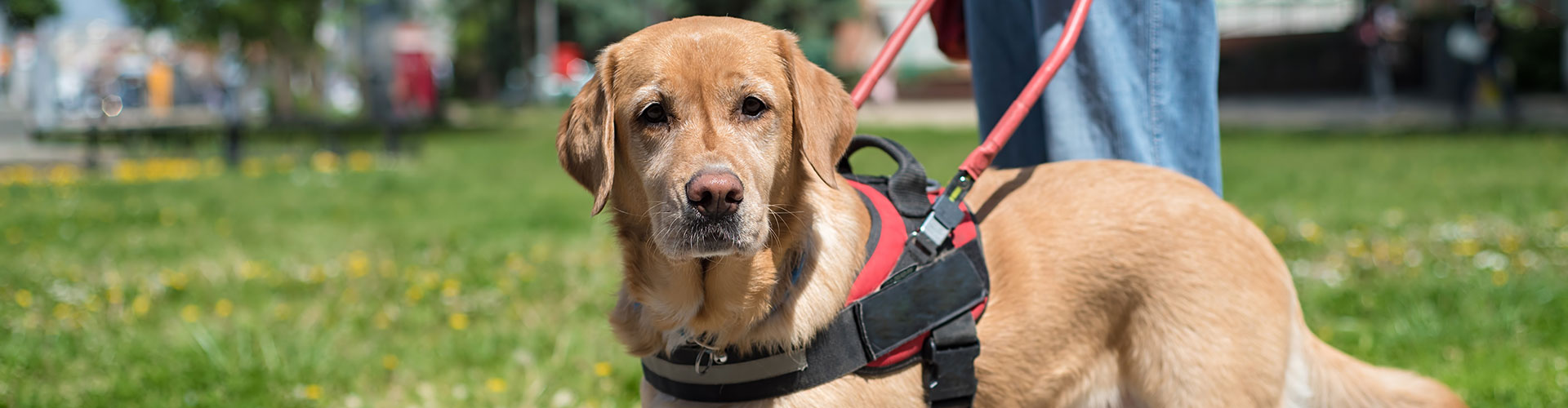
- Service Animals. Service animals are individually trained to provide support to the disabled individual. Service animals can ONLY be dogs.
- Support Animals. These are animals that typically provide emotional and/or therapeutic support to a disabled individual, i.e., emotional support animals.
The Assistance Animal Notice.
The Assistance Animal Notice is broken down into two components: “Assessing a Person’s Request to Have an Animal as a Reasonable Accommodation Under the Fair Housing Act” and “Guidance on Documenting an Individual’s Need for Assistance Animals in Housing.” The first component provides clarification regarding what types of documentation a housing provider can rely upon as verification of a disability and need for an assistance animal. The second component provides guidance to housing providers and individuals on what information should be contained in the documentation submitted by the individual in support of the reasonable accommodation request.
Here are the highlights:
- Disability Verification Documentation. The following disability verification information can be relied upon to assess a reasonable accommodation request:
- A determination of disability from a federal, state or local government agency
- Receipt of disability benefits or services from a federal, state or local agency
- Medicare or Supplemental Security Income for a person under the age of 65
- Veterans’ disability benefits
- Services from a vocational rehabilitation agency
- Eligibility for housing assistance or a housing voucher received because of disability
- Information confirming disability from a health care professional – physician, optometrist, psychiatrist, psychologist, physician’s assistant, nurse practitioner or nurse.
- Prior Approval for Animal Not Required Before Animal Moves into the Home. The individual is not required to ask the housing provider for the reasonable accommodation before bringing the assistance animal into the home. The individual can ask for the accommodation after the fact.
- Internet Websites. Verification of disability from an Internet website that sells certificates, registration or licensing documents for assistance animals to anyone who answers questions or participates in a short interview and pays a fee, is NOT GOOD ENOUGH. What’s good enough? A note from a healthcare professional that sees the individual remotely but still has personal knowledge of the individual.
- Types of Animals that Qualify as Support Animals.
- Household Animals.
- What is a Household Animal? A dog, cat, small bird, rabbit, hamster, gerbil, other rodent, fish, turtle or other small domesticated animal traditionally kept in a house for non-commercial purposes.
- What is NOT a household animal? Reptiles other than turtles, barnyard animals, monkeys, kangaroos and other non-domesticated animals.
- Household Animals.
- What about “Unique Animals?” According to the Notice, if an individual requests a unique type of animal that is not commonly kept in a house, the individual has a substantial burden of demonstrating a disability-related need for the animal.
- Example: A request for a goat or chicken(s). The individual would have to demonstrate unique circumstances that would justify the need for such an animal. What would be considered a unique circumstance?
- The goat or chicken is individually trained to do work or perform tasks that can’t be performed by a dog.
- The individual has allergies that prevent the use of a dog.
- Without the goat or chicken, the symptoms of the disability would be significantly increased.
- The individual wants to keep the animal outdoors in a fenced yard where the goat or chicken can be properly maintained.
- Example: A request for a goat or chicken(s). The individual would have to demonstrate unique circumstances that would justify the need for such an animal. What would be considered a unique circumstance?
Other considerations that are not new but are still worth a mention:
- The housing provider can refuse the accommodation if the animal poses a direct threat that cannot be eliminated or reduced through actions the individual takes to control the animal (like a fenced yard).
- The housing provider cannot charge a fee for processing a reasonable accommodation request.
- The housing provider cannot require a deposit for an assistance animal.
- The housing provider cannot limit the breed or size of the animal unless specific issues with the animal’s conduct create a direct threat to the safety of those in the community, require a fundamental alteration to the nature of the community’s operations, or impose an undue financial and administrative burden on the housing provider.
- The individual is responsible for maintaining and controlling the animal.
- Information relating to an individual’s disability is confidential and cannot be shared with anyone unless the information if needed to evaluate the reasonable accommodation request or unless disclosure is required by law.
While the Assistance Animal Notice offers further clarification on this issue, the continuing rise in the number of assistance animals still leaves unanswered questions. Please consult with an attorney for further guidance.
For more information on HUD’s Assistance Animal Notice, please refer to the following links:
https://www.hud.gov/sites/dfiles/PA/documents/HUDAsstAnimalNC1-28-2020.pdf
https://www.hud.gov/sites/dfiles/PA/documents/AsstAnimalsGuidFS1-24-20.pdf
Nuisance Animals:
Due to the recent pandemic, many owners may be spending more time at home and noticing furry or feathery neighbors in their backyards or rummaging throughout the common areas. Although some of these animals may appear cute at first, they may also present a burden to both homeowners and property owners’ associations (“POAs”). These animals may be referred to as “nuisance animals,” and the Texas Parks and Wildlife Department (“TWPD” has listed the main culprits as follows: 1) feral hogs; 2) overabundant deer; 3) urban coyotes; 4) alligators; 5) bears; 6) cowbirds; 7) herons/heronries; 8) mountain lions; 9) ticks; and 10) woodpeckers. This section will focus on the most common nuisance animals we see in Texas, especially in the Hill Country: feral hogs, deer, coyotes and, as a bonus, feral cats.
Feral Hogs
Feral hogs have been roaming Texas since approximately the 1500s when they were likely introduced by early Spanish explorers. Today, the estimated population in Texas has reached a staggering 1.5 million. With the continued population growth and rise in residential development, feral hogs are a common site around homesteads throughout Texas. This has created a multitude of issues for POAs, especially due to the immense amount of property damage feral hogs tend to create.
Consequently, the State Legislature has introduced measures to address the concerns surrounding feral hogs. Feral hogs are considered unprotected, exotic, non-game animals. The Texas Senate passed Senate Bill 317 that was later signed by the Governor on May 31, 2019. This legislation allows for people to hunt feral hogs without a license and without a season. Thus, as long as a hunter has permission from the property owner to hunt feral hogs, they can do so whenever they please (subject to any local ordinances or restrictions).
Oftentimes, POAs may have restrictions prohibiting hunting within the community. Moreover, cities and counties likely prohibit same within their set boundaries. Considering residential communities house adults and children, the hunting remedy will likely not be a safe or reasonable option for most POAs. Thus, the question arises: What can a POA do to address the onslaught of feral hogs? POAs will need to determine what their long and short-term goals are when addressing this problem. Some of the ways POAs have been addressing the issue of feral hogs is by setting large traps that use a variety of baits since feral hogs have demonstrated understanding of the danger of the trap when using the same bait. Yet, there are risks associated with this method such as the danger a trap may present to residents, especially children. The most common and practical method is typically the utilization of fencing to exclude feral hogs from private property; however, this can also be expensive.
Any efforts by a POA to try and eradicate feral hogs will require careful consideration and planning. POAs should work with their attorney, as well as any county or city officials, to design a plan that is unique to their community if issues with feral hogs escalate.
Urban Coyotes
Coyotes pose a different problem than feral hogs for owners and POAs alike. As development continues to spread, especially throughout rural and less densely populated areas, encounters with coyotes will only increase. Consequently, POAs should be aware of their options for dealing with these animals.
Eradication measures, such as trapping, have proven to be ineffective against coyotes in urban areas. That being the case, TPWD believes education is the best resource and provides a number of safety measures for limiting negative interactions and minimizing problems that urban coyotes may cause:
(1) do not feed the coyotes (intentionally or not), (2) cover compost piles, (3) keep pets indoors or supervise pets while they are outside, (4) walk pets on a leash, (5) refrain from feeding wildlife on the ground (i.e. avoid seed feeders), (6) do not feed feral cats (they are prey for coyotes), and (7) take measures to minimize vegetation near buildings so as to not attract smaller animals that may serve as prey for the coyotes.
If a POA is dealing with unwanted coyotes roaming throughout the community, the guidelines provided above should be observed and may be communicated to the residents in an effort to keep coyotes at bay.
Overabundant Deer
Due to the ever-growing deer population, the Texas legislature has taken action to curb the deer population by creating a hunting season for deer and requiring a license to hunt. Additionally, TPWD has the power to issue trapping and transporting surplus of white-tailed deer permits, specifically listing “Property Owners’ Associations” as permitted recipients of these permits. Fencing has also proven to be an effective exclusion method.
POAs, in addition to considering trapping, transporting of deer, and fencing, may also encourage residents and community members to abstain from feeding any deer in their backyards or in the common areas to discourage deer from seeking food in these areas. In addition, if permitted by a POAs governing documents, POAs may also consider rules or restrictions that prohibit certain types of vegetation within the boundaries of the community that may be appealing or attractive to deer. Remember, when deer are present, so are deer ticks!
Feral Cats
To learn more about why you should not feed feral cats, including the potential criminal liability for doing so, please read Shareholder Eric Tonsul’s article TO FEED OR NOT TO FEED…FERAL CATS in this newsletter.
Prior to implementing any of the measures discussed herein, it is recommended that a POA consult with their attorney to determine the best course of action for their community.
For more information related to nuisance animals and TWPD’s suggestions for same, please refer to the following link:
https://tpwd.texas.gov/huntwild/wild/nuisance/
Join Shareholder Leak K. Burton and Associate Paul Gaines of our San Antonio office on Wednesday, July 15, 2020, for a Nuisance Animals webinar to learn more about the types of animals classified as nuisance animals, and the strategies and potential pitfalls associations face when trying to combat the issue.
This webinar is approved by the Community Association Managers International Certification Board (CAMICB) to fulfill 1 hour of continuing education requirements for the CMCA certification.